Best eCommerce website? Plan it before the build.
The best eCommerce website for your business comes from decisions about products, payments, shipping, content and budget made before anyone designs a page. DIGITALON plans them with you before quoting, and our team at Wurtulla on the Sunshine Coast builds the store on WooCommerce for a price agreed up front.
Your plan sets the scope and price.
There is no single best eCommerce website to copy, because the right store depends on what you sell and how your customers buy. A small range of simple products needs different pages, payments and delivery rules from a large catalogue with sizes, colours and trade prices. The decisions below set the scope, the package and the price, so they are worth making before any design begins.
Bring what you know, and we work through the rest with you at scoping: the pages you need, the catalogue and who loads it, the payment and delivery options, the content you will write or supply, and any system the store must connect to. From that we confirm the package, anything quoted separately and the payment stages in writing, so the price is settled before work starts.
Choices only you can make.
Each of these changes the scope, so settle them before comparing packages.
- What you sell, and to whom
- How customers pay and receive orders
- What you can spend, now and each year
Scope and price in writing.
Your decisions become a written quote before any design work starts.
- The package and any extras
- Who supplies and loads the products
- Deposit and payment stages
Six decisions to make before the build.
Work through them in this order. Each one narrows the next, and together they point to a package.
The brief: what, who and why
Write down what you sell, who buys it, how they find you now and what the store must do on day one. Separate the must-haves from the nice-to-haves, because the must-haves set the package and the rest can be quoted or added later.
The catalogue: count it, then structure it
Count your products and note which come in sizes, colours or other variations. Decide the categories and attributes shoppers will filter by, and who will supply or import the product data. These facts are agreed before we quote, and large imports or complex catalogues are priced to scope.
Payments: what your customers expect
List the payment methods your customers already use. Stripe and PayPal are set up in every package, covering Visa, Mastercard and American Express, and Premium adds Apple Pay, Google Pay and Afterpay. Each provider charges its own transaction fees, so compare them before you choose.
Shipping: how orders reach customers
Work out how you send orders today: one flat rate, free over a set amount, or priced by weight or location. Flat-rate or free shipping comes with every package, rules by weight, location and cart value with Standard, and a calculator and tracking with Premium; live carrier rates are a quoted add-on.
Content: who writes and supplies what
Product descriptions, photos, your about story and the delivery, returns and privacy wording all need someone to write, shoot or approve them. Decide who does each and by when; a basic store usually takes two to three weeks, and content, feedback and the catalogue set the rest of the schedule.
Budget: the build and the years after
Set aside the one-off build price, $4,990, $5,990 or $7,990, plus anything quoted outside the package. Then allow for the running costs: hosting, your domain, payment provider fees, ongoing maintenance and any optional extensions or renewals. The right package is the one your must-haves need.
Choosing the package that fits the plan.
Match the package to your must-haves: Basic for a small range with simple payments and shipping, Standard for a real catalogue with accounts, filters and SEO, and Premium when you also want Apple Pay, Google Pay, Afterpay, live search and order tracking.
Basic
A simple online shop with everything it takes to sell properly.
$4,990One-off build price
- 6 pages: home, about, contact, shop, cart and checkout
- Mobile optimisation
- Card and PayPal payments
- Flat-rate or free shipping
- WordFence firewall and SSL certificate
- Links to your social media
- Nightly backups
Standard
A professional store for a real catalogue, with accounts and automation.
$5,990One-off build price
- 10 website pages
- Everything in Basic, plus
- Search engine optimisation (SEO)
- Customer accounts and order history
- Product filters and categories
- PDF invoices and packing slips
- Wish list and discount coupons
- Advanced shipping rules
- Google Analytics
- 1:1 website training
Premium
For stores pushing on sales: more ways to pay, find and follow an order.
$7,990One-off build price
- 20 website pages
- Everything in Standard, plus
- AI search optimisation (GEO)
- Mega menu
- Apple Pay, Google Pay and Afterpay
- Shipping cost calculator and order tracking
- Live product search and product compare
- Blog
- Your CRM integrated
Hosting, your domain, your payment provider’s transaction fees and ongoing maintenance are separate. The page counts are website pages, not a product limit: catalogue size, product imports, migrations and custom integrations are agreed and quoted before work starts. Compare every inclusion and the optional features on eCommerce pricing, or see website design packages if you do not need a shop.
Your store, your hosting, your login.
Every DIGITALON store is a custom WordPress and WooCommerce build. WooCommerce is free and open source, takes no commission on your sales and runs on hosting you choose, with the administrator login yours from day one.
The shop and the pages that bring shoppers to it live in one WordPress site, edited the same way. You can run it yourself, or hand the updates to the team that built it.
No platform commission
Your payment provider charges its transaction fee. WooCommerce itself takes no percentage of your sales and has no monthly platform fee.
Hosting you choose
Keep your own host, or use our managed WordPress hosting, sized for the catalogue and the traffic you expect.
Care after launch
Our maintenance packages cover plugin and WooCommerce updates, backups, security checks and support.
One Australian team
The people who scope, design and build the store are the people who answer your questions, from Wurtulla on the Sunshine Coast.
From brief to first order.
A basic store usually takes two to three weeks. Extra features and integrations add time, and we tell you how much before we begin.
Scope and price
We agree the pages, catalogue, features and search work, then confirm the package, any extras and the payment stages in writing.
Design
You see the design and sign it off before the build starts, while changing a layout is still quick.
Build and test
Products, payments, shipping and tax are set up in WooCommerce, then tested with real orders on a phone and a desktop.
Launch and hand over
We go live and hand over your administrator login. Standard and Premium include one-to-one training on your own store.
Online stores we have built.
These are stores and online sales sites our team designed and built. They show completed work, not a promise of the same result for every business.
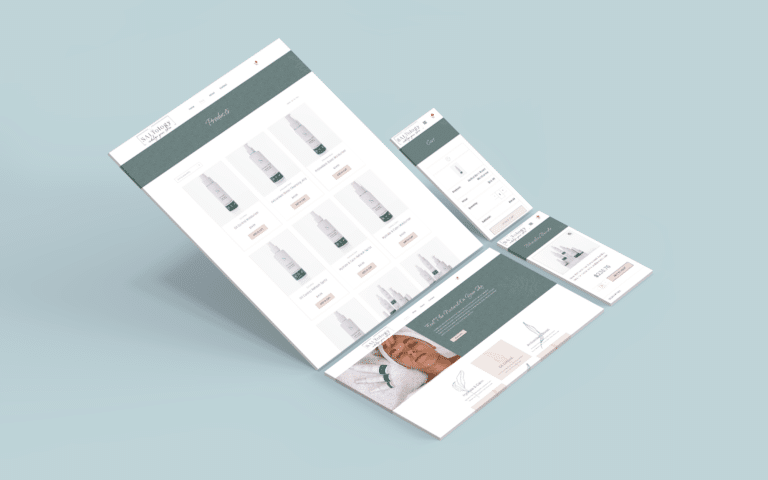 Beauty & skincareNatural Skincare Shop
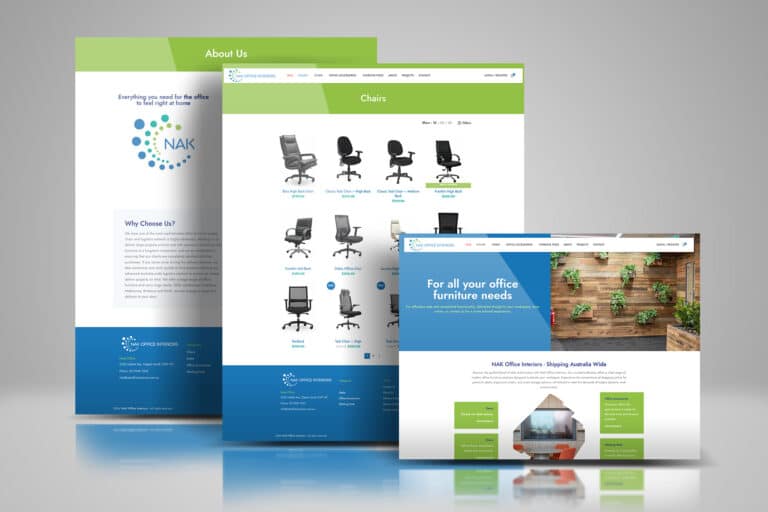 FurnitureOffice Furniture Shop
 Made to orderCustom Vinyl Lettering
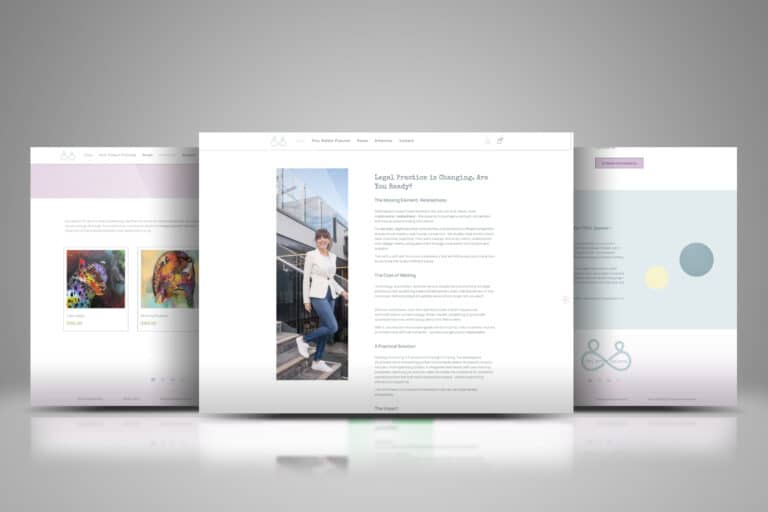 Books & consultingLegal Consulting & Author
 Retreats & coursesHoffman Process Australia
 CoursesOnline English Teaching
The client view.
I was very impressed as they were very responsive and helpful as I was a newbie. Good communication with Sabrina who took the time to explain all the process and gave some tips.
Questions to settle before the build.
Briefs, catalogues, payments, shipping, budget, timing and life after launch.
Ask us about your storeWhat should we have ready before asking for a quote?
A short brief is enough to start: what you sell, roughly how many products and variations, how you want to take payment, how you ship, and any system the store must connect to. Product details, photos and policy wording can come later, but say who will supply them so the quote covers the right work.
Which planning decisions decide the package?
Mostly how shoppers will find products, how they will pay and how much search work you want in the build. A small range with card, PayPal and simple shipping fits Basic at $4,990; product filters, customer accounts, advanced shipping rules and SEO point to Standard at $5,990; Apple Pay, Google Pay, Afterpay, live search, order tracking, a blog or GEO point to Premium at $7,990.
The full inclusions are on our eCommerce pricing page.
Should our budget add GST to the package prices?
No. The $4,990, $5,990 and $7,990 prices already include GST, and your invoice itemises it. What the budget should add is anything quoted outside the package and the yearly costs of hosting, your domain and payment provider fees.
How much product detail do we need before the build starts?
Enough to agree the scope: how many products, which have variations such as size or colour, and whether you will supply the data or we import it. Full descriptions and photos can arrive during the build, but the schedule moves with them, and large imports or complex catalogues are quoted before work starts.
Do we need payment and courier accounts set up first?
It helps to start them early. Stripe and PayPal are connected in every package to your own accounts, so payments and their fees stay between you and the provider, and Premium adds Apple Pay, Google Pay and Afterpay.
If flat-rate or free shipping will not do, Standard adds rules by weight, location and cart value, and live Australia Post, Sendle or courier rates are a quoted add-on.
When should planning start if we have a launch date?
Well before it. A basic store usually takes two to three weeks once work starts, and your content, feedback, catalogue and any extra features set the rest, so get the brief and product data moving before you fix the date. We agree the schedule with the scope and price.
What if our plan includes things no package lists?
They are scoped and quoted before work starts. Premium includes a CRM integration; subscriptions, wholesale pricing, accounting or carrier connections, large imports and other custom integrations are priced to your requirements, so name them in the brief.
Replacing a store on Shopify, Wix, Squarespace or older WordPress is planned the same way: products, categories, customers and order history carried across, ranking addresses kept or redirected, and the old store live until the new one is tested.
Can WooCommerce handle what we plan to sell?
Yes, for most things a business sells online. WooCommerce handles physical products with sizes and colours, downloads, subscriptions, bookings, gift cards and courses, and a wholesale area can sit alongside the retail store; anything outside your package is quoted first.
If you sell courses or appointments, see selling online courses and booking website design.
Should search be part of the plan from the start?
Yes, because product names and categories are easiest to shape around real searches before the catalogue is loaded. Standard and Premium include keyword and category research and on-page SEO, and Premium adds AI search optimisation (GEO).
Ongoing SEO after launch is a separate service through our SEO packages, and no one can promise a ranking, traffic, sales or an AI citation.
Should we plan to maintain the store ourselves?
Decide before launch, because it changes your running costs. You own the store and hold the administrator login, so you can update it yourself, with one-to-one training included in Standard and Premium.
Or budget for one of our maintenance packages for updates, backups, security and support, and our managed WordPress hosting if you want one team for both.
Bring us your plan, however rough.
Send what you have so far: what you sell, how you ship, what you can spend and anything the store must connect to. We will work through the rest with you, recommend the package that fits and confirm the price in writing before work starts. DIGITALON’s in-house team at Wurtulla on the Sunshine Coast works with businesses across Australia.